
The artwork is located in a place where the Flemish Land Agency (VLM) conducted an archaeological trial trench excavation before constructing water buffer basins in 2011 for the Jesseren land consolidation project.
During the investigation, heavily eroded Gallo-Roman settlement remains were found. Despite this erosion, various traces of numerous Roman objects were discovered. In addition to rubbish pits, a possible pond, and a cremation grave, a well made of Maastricht stone (marl) was also uncovered. The information found indicates that between 150 and 300 AD (Gallo-Roman period), people already lived and worked at this location in the shadow of the Roman city of Tongeren.
The VLM made the found information accessible to everyone and, together with the Jesseren land consolidation project, wants to use it to increase public support for archaeology through a unique archaeological artwork.
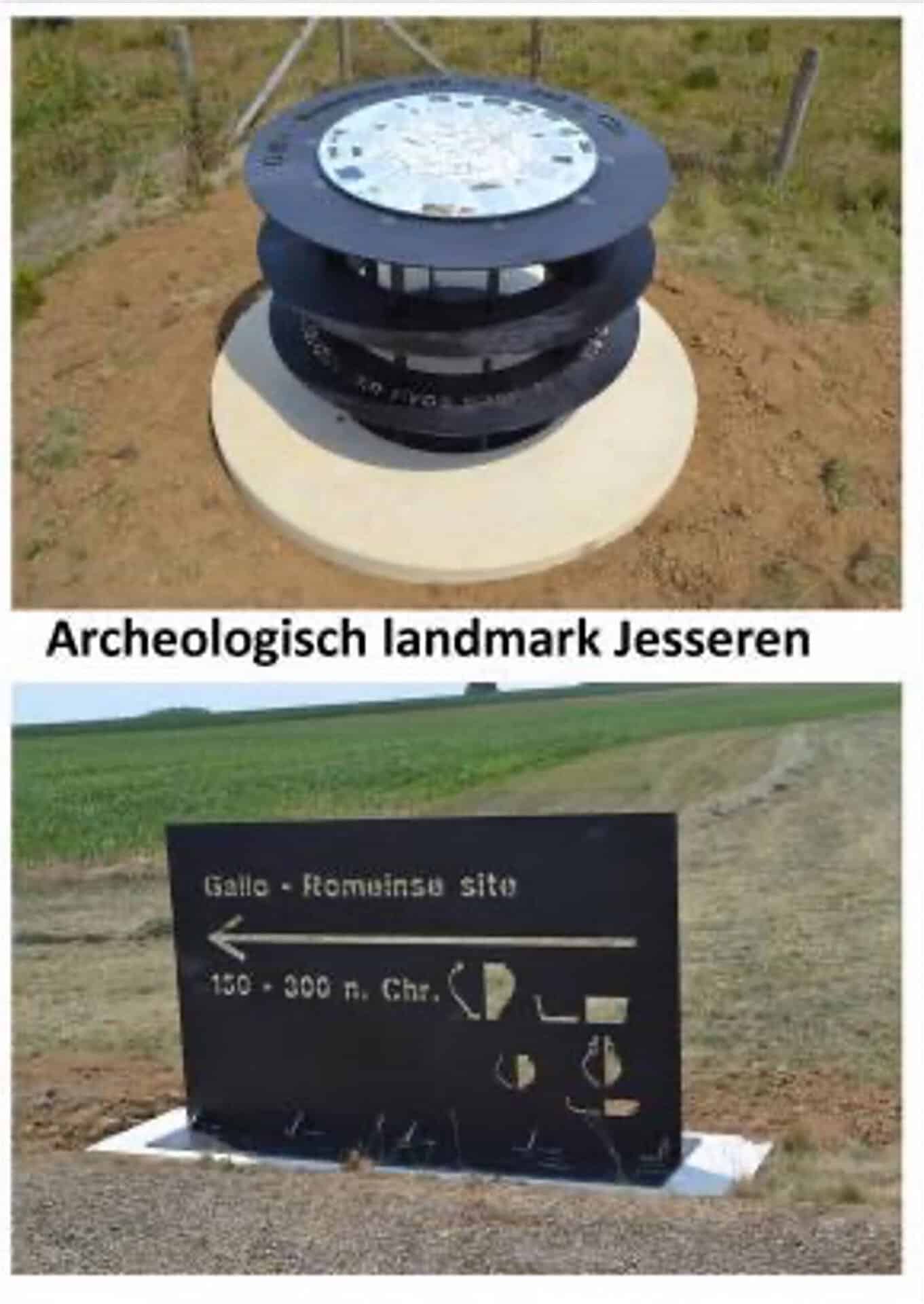
The landmark consists of three parts. The first is a contemporary signpost featuring the milled shapes of the grave goods from the discovered cremation grave.
The signpost guides you to a second element, the archaeological orientation table, which is located at a rest and picnic area. It consists of a concrete base in the color of Maastricht limestone, topped with three circular elements in weathering steel. The shape refers to the discovered Gallo-Roman water well. The information panel of the orientation table tells about the Gallo-Roman site, as well as seven other interesting archaeological locations in the area.
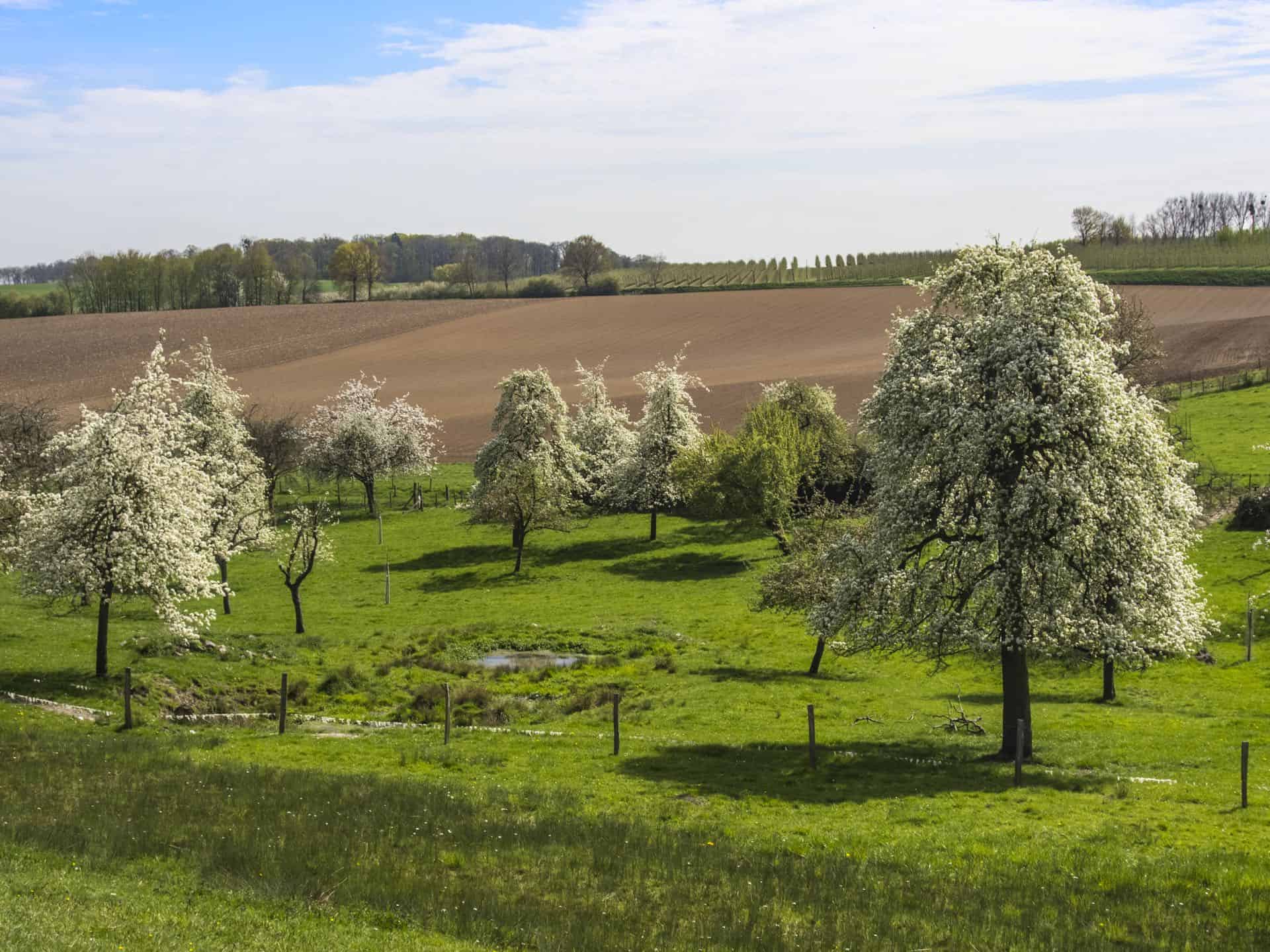
In the slope of the large water buffer basin, where the water well was discovered, stands the third part of the landmark bearing the Latin word ‘aqua’ and an arrow pointing to the bottom. Water is the ‘blue’ thread running through the story of this unique place. After all, the water buffer basins were created because of persistent flooding for local residents. Soil erosion and flooding caused the truncation of the archaeological site. It is a miracle that the well was still found, but the discovery certainly completes the water story!
To emphasize the water theme, the following text by Virgil was milled into the orientation table: ‘Claudite iam rivos, pueri sat prata biberunt’, which roughly translates to ‘Close the water supply, boys, the fields have drunk enough’.